
Over three days in New Delhi last week, HMD’s Chairman and CEO Jean-Francois Baril met the Hon’ble Lok Sabha Speaker Shri Om Birla, the Hon’ble Vice President Shri C. P. Radhakrishnan, and the Hon’ble Union Finance Minister Smt. Nirmala Sitharaman.
Different rooms, different agendas. But reading HMD Chairman’s own accounts of the three meetings, one thread runs through all of them: the phone in an ordinary person’s hand, and what can be made to happen on it.
That thread is worth following, because it leads somewhere a good deal of the payments industry still walks straight past.
The number, and the number behind it
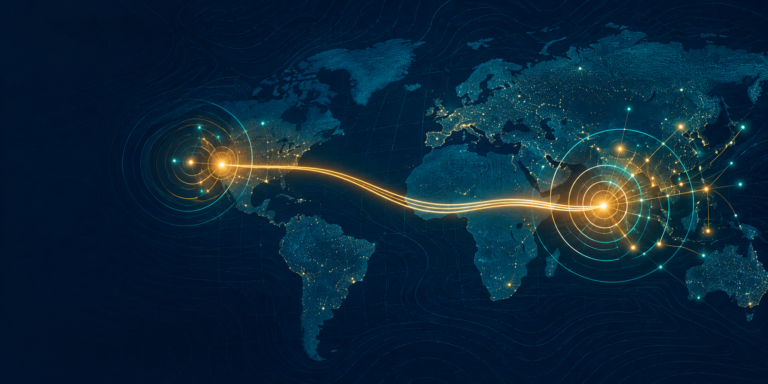
India received $135.4 billion in remittances in FY25, an all-time high, up around 14% on the year, and comfortably the largest inflow of any country in the world. Mexico, in second place, received roughly half as much.
Money on that scale does not come from institutions. It comes from roughly 35 million people working abroad, in the Gulf, in North America, in Europe, sending portions of their salary home. Usually in small amounts. Usually every month. Usually to someone who is waiting for it.
Which is why the second number matters as much as the first. The World Bank puts the global average cost of sending $200 at 6.36% of the amount sent. The United Nations Sustainable Development Goal target is 3% by 2030. Applied to flows the size of India’s, the distance between those two figures is measured in billions of dollars a year that never arrive.
Where the friction actually sits
Here is the part that gets missed. The cost and the delay in a cross-border transfer are rarely in the sending. They sit at the receiving end, in whether the person on the other side has an account the money can land in, a device that can confirm it arrived, and enough familiarity with the process to trust it.
The World Bank’s Global Findex 2025 makes the scale of that gap plain. Some 84% of adults in low- and middle-income economies own a mobile phone, and three billion of them own a smartphone. The distance between those two figures is a very large number of people who are connected but not served: reachable by a call, invisible to most financial applications.
India has spent a decade closing exactly this gap, and has done it better than anyone. UPI transactions grew at a compound annual rate of 72% between FY2019-20 and FY2024-25. Around 26 crore new users and 5.5 crore new merchants came onto the platform in four years. UPI now has roughly 45 crore active users.
But a payment system reaches only as far as the devices that can run it. Which is why UPI on feature phones, one of the items HMD’s Chairman described discussing with the Lok Sabha Speaker, is not a footnote. It is the mechanism by which a national payment system reaches the last household rather than the last smartphone.
Two offices, one idea
The Vice President has been explicit on this point. “India’s digital journey is not just about technology — it is about transforming lives,” Shri Radhakrishnan said last October, urging that innovations “reach the last mile, especially in Bharat’s heartland.” He has argued that Tier-2 and Tier-3 cities must become the new growth engines of India’s digital economy, which is another way of saying that inclusion counts only where it is hardest to deliver.
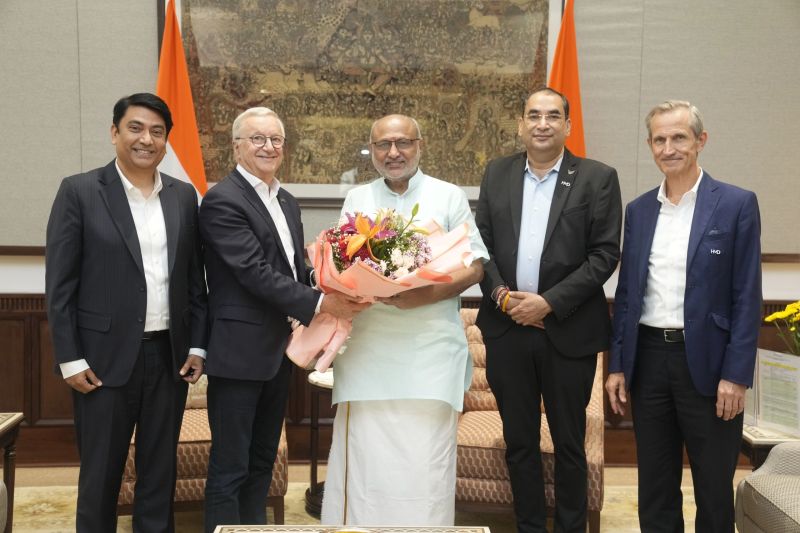
HMD’s Chairman’s account of his meeting at the highest constitutional office describes that same framing: a discussion of HMD’s role in reaching, in his words, the common man and the masses across India.
At the Ministry of Finance, the conversation turned practical. Smt. Sitharaman has set a target of one billion UPI transactions a day within two to three years, and has pressed officials to close infrastructure gaps and improve the end-user experience. That is an ambition about depth as much as volume, and it runs into the same question as everything else here. A transaction target is met one household at a time, and only by households holding a device that can take part.
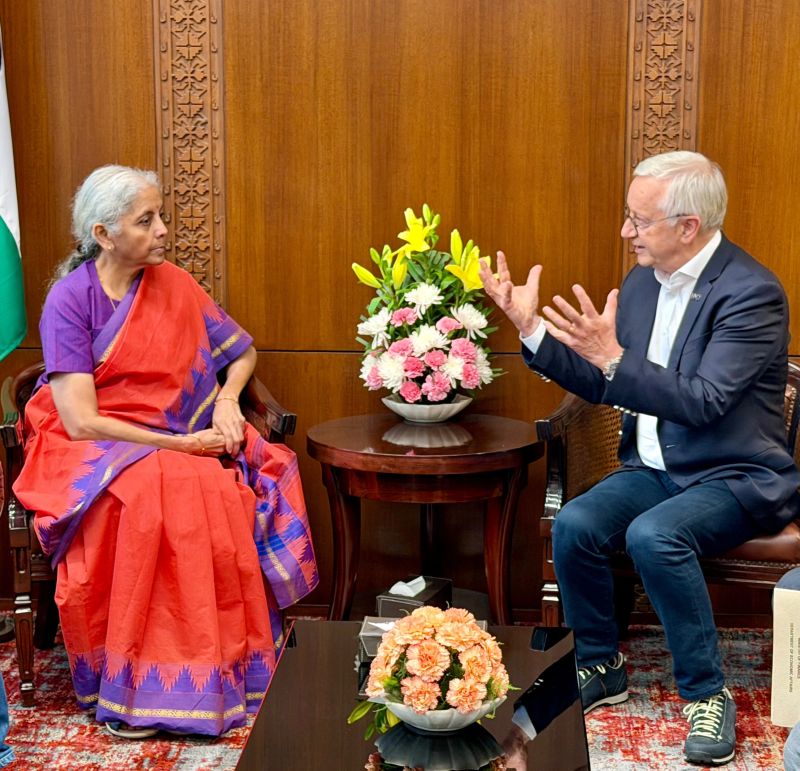
By HMD CHairman’s account, that meeting covered HMD’s remittance service and its planned launch in India later this year, along with a live demonstration, and the Finance Minister assured the Ministry’s support in growing it.
The obvious caveat applies: these are HMD’s descriptions of its own meetings, not government statements. But the direction of Indian policy is a matter of public record, and it is unambiguous. Reach the last mile. Bring the cost down. Make the borders thinner.
Why this is the work
The financial inclusion work Kivi3 is doing with HMD Global is instrumental here. What we build is not another way to move money. It is a connection between a family and the person supporting them from abroad, so that what is sent arrives when it is needed, at a cost that does not eat into it, on the phone they already own. Feature phone or smartphone: no household should have to own the right device to qualify.
Money arriving faster is of little use if it arrives somewhere the recipient cannot get to. A lower headline fee is of little use if collecting it requires a device the recipient does not own. The product is not the transfer. The product is the last hundred metres, the payout partner down the road, the account the family already uses, the confirmation that lands on the handset actually in the house, in rupees, without anyone having to learn a new system in order to receive their own money.
That is unglamorous engineering and slow commercial work: licences, local partners, integration with the payment infrastructure a country has already built rather than around it. It is also the only part that changes the number a household actually receives.
India marked its 80th Independence Day on 15 August. Eighty years on, the country receives more money from its people abroad than any nation on earth, and has built payment infrastructure the rest of the world studies. What remains is making certain it reaches everyone, including the households whose phone is not a smartphone.
To all our colleagues, partners and friends across India: a very happy Independence Day.
Sources
- India remains the world’s largest recipient of remittances, with inflows reaching US$135.4 billion in FY25 — Press Information Bureau, Government of India. https://www.pib.gov.in/PressReleasePage.aspx?PRID=2219971®=48&lang=2
- Remittance Prices Worldwide — global average cost of sending $200 (6.36%) — World Bank. https://remittanceprices.worldbank.org/
- The Global Findex Database 2025 — 84% of adults in low- and middle-income economies own a mobile phone; three billion own a smartphone — World Bank. https://www.worldbank.org/en/publication/globalfindex
- FM Sitharaman targets one billion UPI transactions per day to broaden its reach and impact — UPI CAGR, user and merchant onboarding figures (28 April 2025) — News On AIR / Akashvani, Prasar Bharati. https://newsonair.gov.in/fm-sitharaman-targets-one-billion-upi-transactions-per-day-to-broaden-its-reach-and-impact
- VP Radhakrishnan Lauds Digital India Push, Emphasizes Tier-2 Tech Growth (24 October 2025) — Devdiscourse. https://www.devdiscourse.com/article/law-order/3673516-vp-radhakrishnan-lauds-digital-india-push-emphasizes-tier-2-tech-growth
- Shri C. P. Radhakrishnan sworn in as the 15th Vice President of India and Chairman of Rajya Sabha — Vice President of India, Government of India. https://vicepresidentofindia.nic.in/pressrelease/shri-c-p-radhakrishnan-sworn-15th-vice-president-india-and-chairman-rajya-sabha
- 80th Independence Day 2026 — Press Information Bureau, Government of India. https://www.pib.gov.in/independenceday/2026/Default.aspx?reg=3&lang=1
- Jean-Francois Baril on the meeting with the Hon’ble Lok Sabha Speaker Shri Om Birla — LinkedIn. https://www.linkedin.com/feed/update/urn:li:activity:7493725885188104192/
- Jean-Francois Baril on the meeting with the Hon’ble Vice President Shri C. P. Radhakrishnan — LinkedIn. https://www.linkedin.com/feed/update/urn:li:activity:7494056598756302850/
- Jean-Francois Baril on the meeting with the Hon’ble Union Finance Minister Smt. Nirmala Sitharaman — LinkedIn. https://www.linkedin.com/feed/update/urn:li:activity:7494058009074126848/
- Koin Remit Is Now Live on Android for Receivers in India (3 August 2026) — Kivi3. https://kivi3.com/2026/08/digital-money-payments-koin-remit-now-live-on-android/