
Remittances

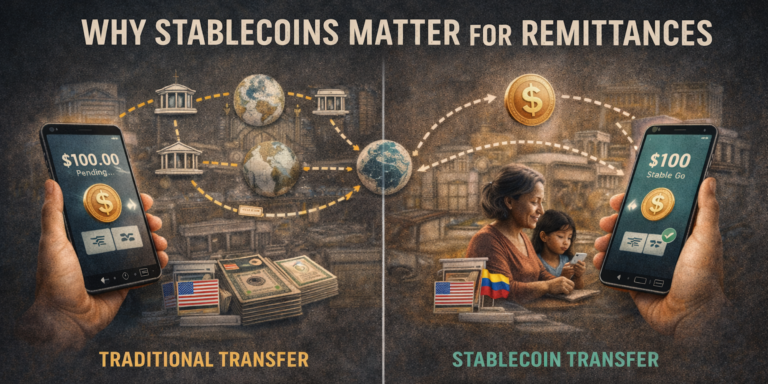
Why Stablecoins Matter for Remittances

Sending money across borders is still slow and expensive because it relies on complex, layered systems built decades ago.
Stablecoins do not replace remittance services, but they simplify how value moves between them. By reducing technical steps and settlement time, they help lower hidden frictions that matter most to families sending money home.

The Hidden Cost of Sending $100

Sending 100 dollars does not mean 100 dollars arrives.
Between fees, exchange rate margins, and delays, part of the money disappears along the way. For families relying on small, regular transfers, these hidden costs reduce what can be spent on food, healthcare, or school fees. When transfers are small, every dollar lost matters.

$800 Billion That Moves Quietly

Every day, millions of people send money across borders. Not to invest or speculate, but simply to support their families. Taken together, these quiet, personal transfers now represent one of the largest and most resilient financial flows in the world.
Bigger than aid, more stable than investment, remittances are driven by responsibility, not strategy. Sent in small but regular amounts, they help families plan, absorb shocks, and sustain local economies. Often invisible at a global level, their impact is deeply felt by those who depend on them every day.

Remittances are everyday income for millions.

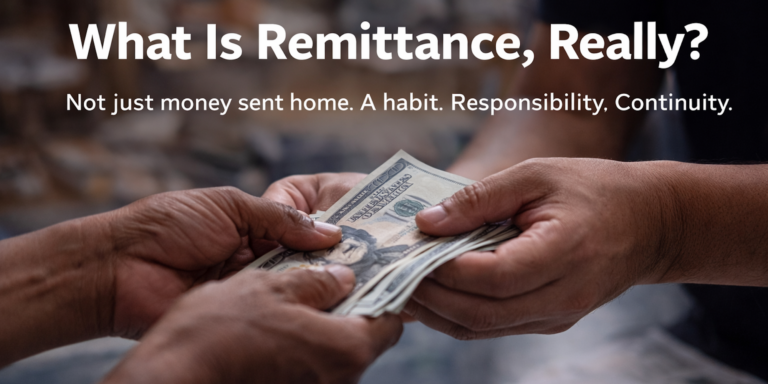
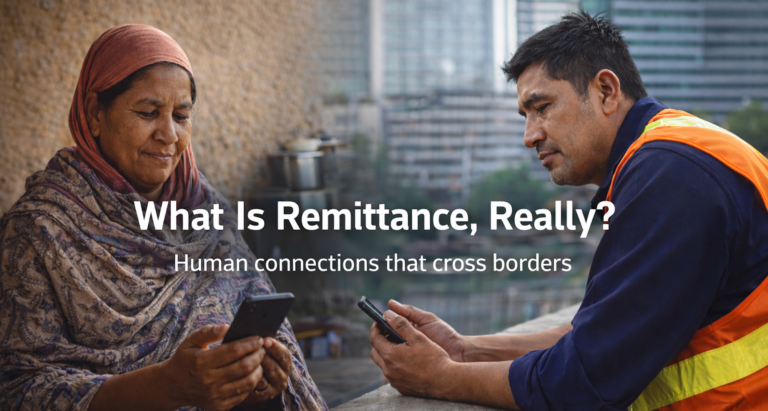
What Is Remittance, Really? 

For many Venezuelan families today, remittance is not a definition. It is survival.
It is the money sent from abroad to cover food, medicine, school fees, or rent, when local income is no longer enough. Sent in small but regular amounts, remittances have become a lifeline, helping families maintain continuity and dignity amid economic instability. Behind every transfer is a story of distance, responsibility, and quiet sacrifice.