
Stablecoins

The Bank That Doesn’t Want You to See the Stablecoin

The Philippines’ second-largest bank just partnered with stablecoin infrastructure firm Meridian to settle remittances — and its CEO says clients should never notice the difference. Here’s what that signals for the $38 billion Filipino remittance market, and for stablecoin rails everywhere else.

The Diaspora Economy Just Got a New Settlement Layer

LemFi is moving two million customers' remittances onto stablecoin rails through a new partnership with BVNK — a sign that stablecoin settlement has moved from pilot to production at real scale.

The 1% Tax That’s Teaching Migrants to Send Money On-Chain

A new 1% U.S. tax on cash remittances was supposed to raise $10 billion. Six months in, it looks more like it's teaching migrant families how to send money on-chain instead — and once they learn the route, they're not going back.

Cost, Speed, and Predictability: What Stablecoins Change

When money moves across borders, three things matter: how much arrives, how fast it arrives, and how predictable the process is.
Stablecoins influence all three. By settling value quickly and transparently, they reduce uncertainty for families who depend on remittances and need to know when and how much money will be available.

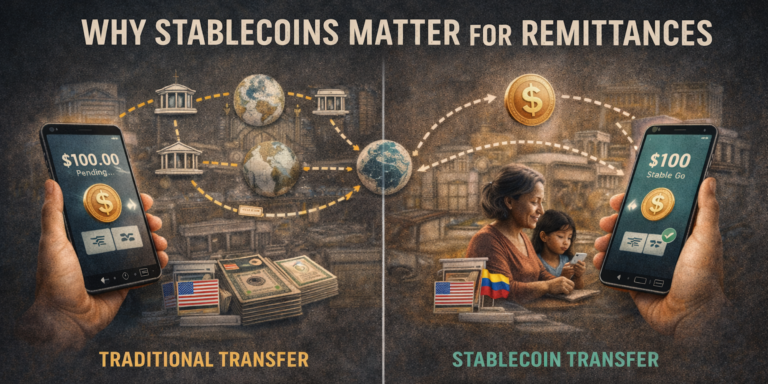
Why Stablecoins Matter for Remittances

Sending money across borders is still slow and expensive because it relies on complex, layered systems built decades ago.
Stablecoins do not replace remittance services, but they simplify how value moves between them. By reducing technical steps and settlement time, they help lower hidden frictions that matter most to families sending money home.

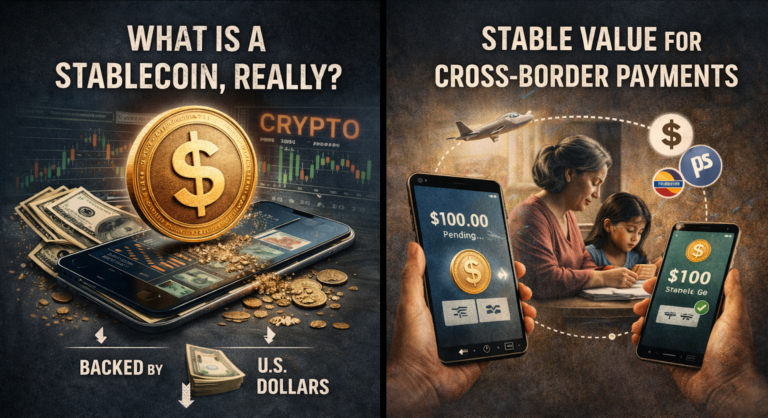
What Is a Stablecoin, Really?

Stablecoins are not about speculation or price swings. They are designed for predictability.
Linked to traditional currencies like the US dollar, stablecoins aim to keep a stable value so people know exactly how much money they are sending and receiving. In cross-border payments, that certainty matters more than growth.