
When someone sends 100 dollars, the person receiving it rarely gets the full amount.
Some of the money disappears along the way. Through fees. Through exchange rates. Through delays.
Fees Are Only Part of the Story
UN DESA highlights that remittance costs remain well above the global policy target of 3%, especially in developing regions. In early 2025, the average cost of sending 200 dollars to sub-Saharan Africa was close to 9%, compared to a global average of around 6.4%.
Exchange rate margins often account for a large share of these hidden costs.
Small Transfers, Higher Burden
The problem is not just the cost. It is who pays it.
Smaller transfers face higher relative costs. This means the people sending the smallest amounts, often the most vulnerable households, lose the largest share of what they send.
Not All Routes Are Equal
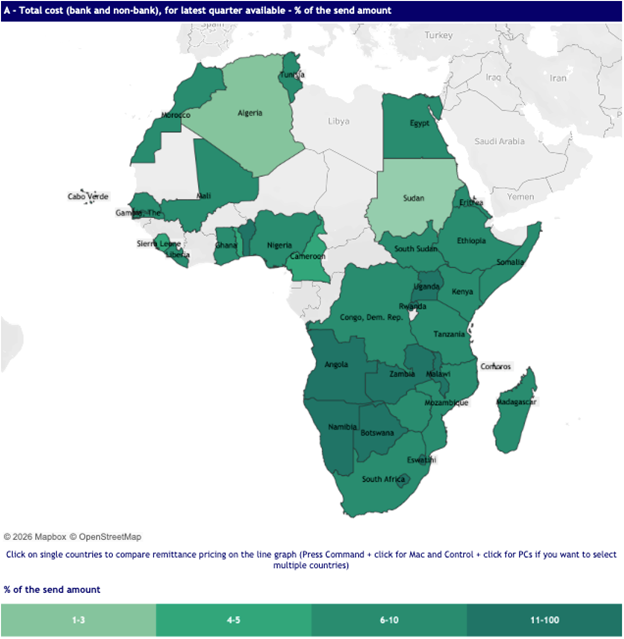
Costs vary widely by corridor.
UN DESA data confirms that remittance costs differ sharply depending on region, regulation, competition, and access to digital channels. Some routes are fast and affordable. Others remain expensive, slow, and cash-based.
Time Matters Too
Cost is not only about money. It is also about time.
Delays can mean missed rent, postponed healthcare, or unpaid school fees. For families living month to month, predictability matters as much as price.
Why This Deserves Attention
Every dollar lost in remittance costs is a dollar not spent on food, education, or health.
UN DESA stresses that reducing remittance costs is not just a financial goal. It is directly linked to poverty reduction, household resilience, and sustainable development outcomes.
Sources & References
This article is informed by public data and research from internationally recognized institutions monitoring remittance costs and financial access:
- United Nations Department of Economic and Social Affairs
World Economic Situation and Prospects, Monthly Briefing No.196 (November 2025)
https://policy.desa.un.org/publications/world-economic-situation-and-prospects-november-2025-briefing-no-196 - RemitSCOPE
RemitSCOPE provides a detailed, corridor-level database breaking down the total cost of remittances, including transfer fees and exchange rate margins. Its data highlights significant cost disparities across countries and regions and helps make visible the hidden components of remittance pricing.
https://remitscope.org/ - World Bank
Remittance Prices Worldwide (2023–2024 editions)
The World Bank reports that global average remittance costs remain around 6 percent, well above international targets, with higher relative costs for small transfers.
Figures cited are based on the latest publicly available international estimates and may vary by corridor, country, provider, and reporting methodology.