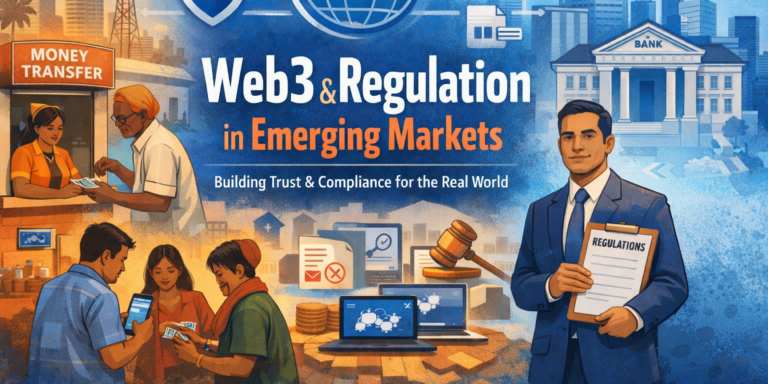
For years, Web3 has positioned itself as an alternative to regulation—especially in emerging markets where financial infrastructure is fragmented or incomplete. But as blockchain-based services move from experimentation to real-world deployment, that narrative no longer holds.
When Web3 touches remittances, savings, and everyday payments, the stakes change. Users are more vulnerable, trust is harder to rebuild, and failures scale fast. In these environments, regulation is not an obstacle to innovation—it is the condition that makes innovation sustainable.
This article explores why regulatory alignment is becoming central to deploying Web3 services in emerging markets, how compliance enables trust and scale, and why the next phase of Web3 will be built with regulators rather than around them. The future of financial inclusion will not be permissionless by accident—it will be compliant by design.