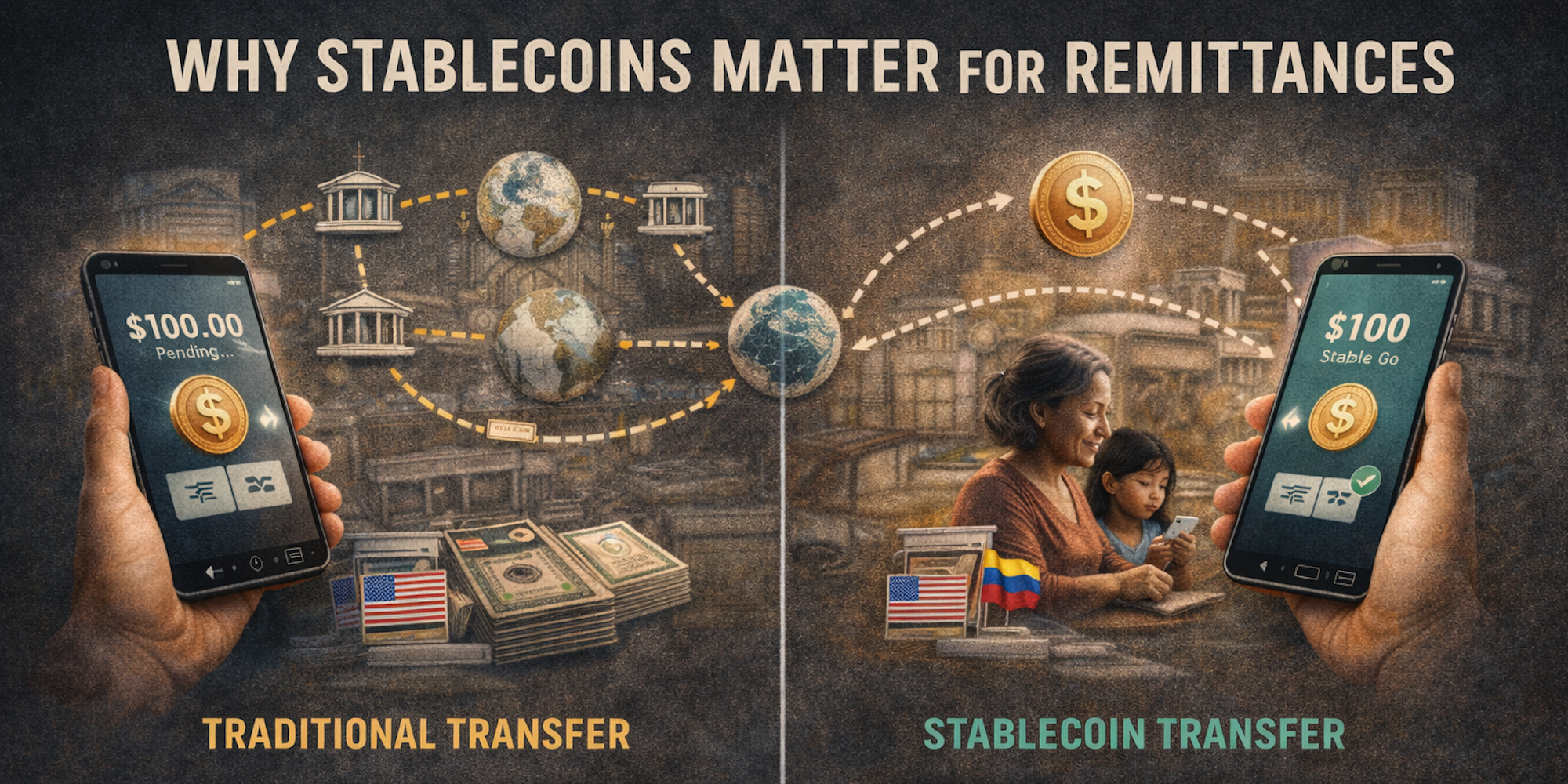
Sending money across borders is still slow, layered, and expensive.
Between the sender and the receiver, funds often pass through multiple intermediaries, banking systems, and time zones. Each step adds cost, delay, or uncertainty.
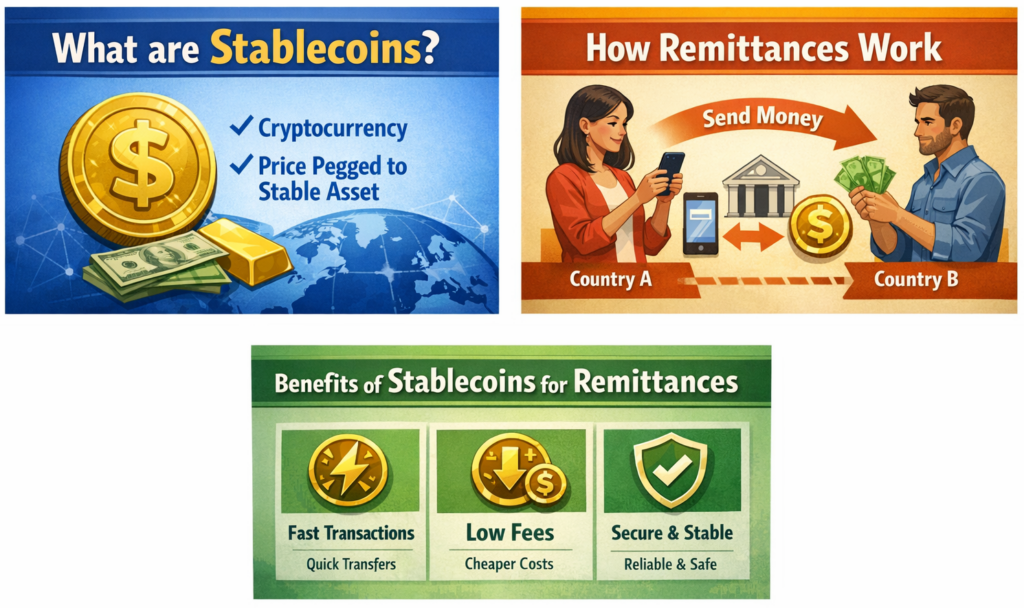
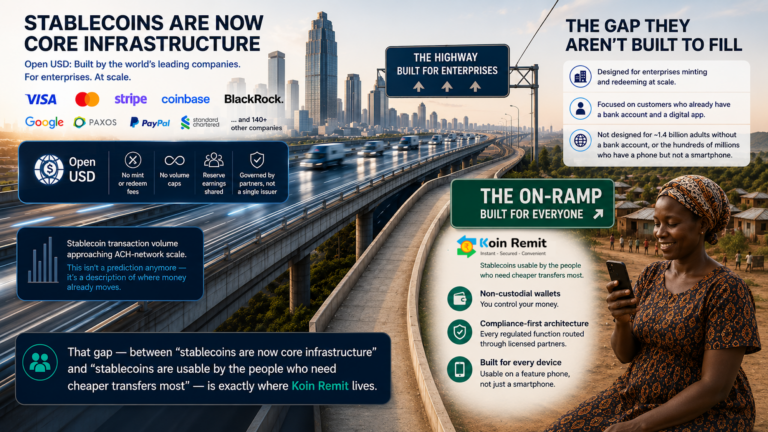
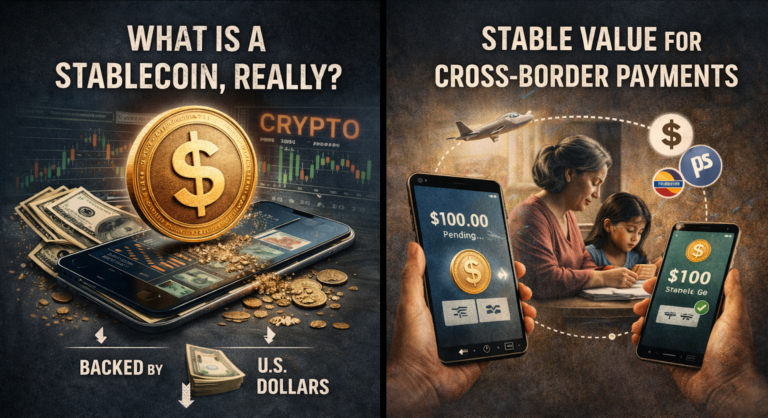
Stablecoins change how money moves between institutions.
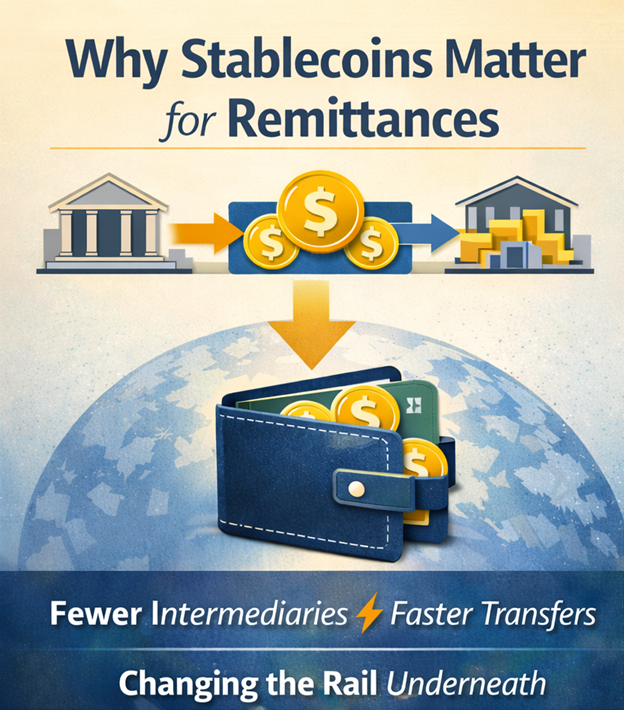
Fewer Layers, Faster Settlement
Traditional cross-border transfers rely on correspondent banking networks built decades ago.
Stablecoins allow value to be transferred directly between digital wallets, often settling in minutes rather than days. This does not remove the need for regulation, identity checks, or off-ramps. But it reduces the number of technical steps in between.
Cost Is Not Just Fees
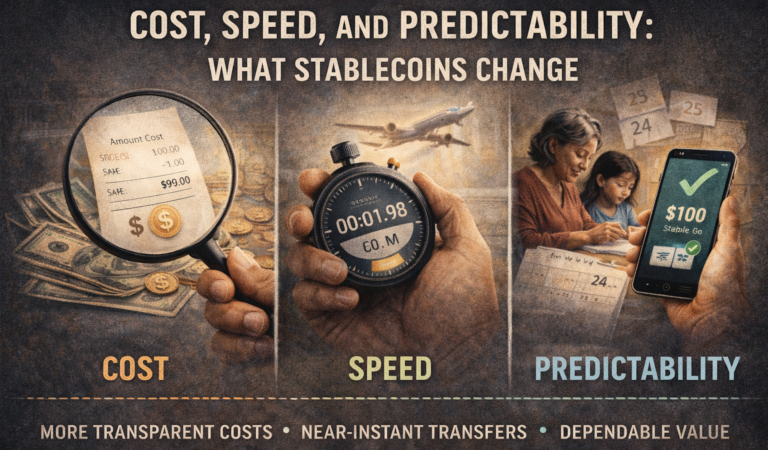
As discussed in your remittance articles, cost is not only about visible fees. It includes FX spreads, delays, and uncertainty.
By settling value directly, stablecoin-based transfers can reduce some of these hidden frictions. This is why they are increasingly explored for cross-border payments and remittances.
Not a Replacement, But a Layer
Stablecoins do not replace remittance services.
They change the underlying rail.
People still need access points. Cash-out options. Compliance. Support. The difference is that the movement of value itself becomes simpler.
Sources & References
- Bank for International Settlements
Enhancing Cross-Border Payments programme - World Bank
Research on remittance costs and payment infrastructure - Financial Stability Board
Reports on global stablecoin arrangements