
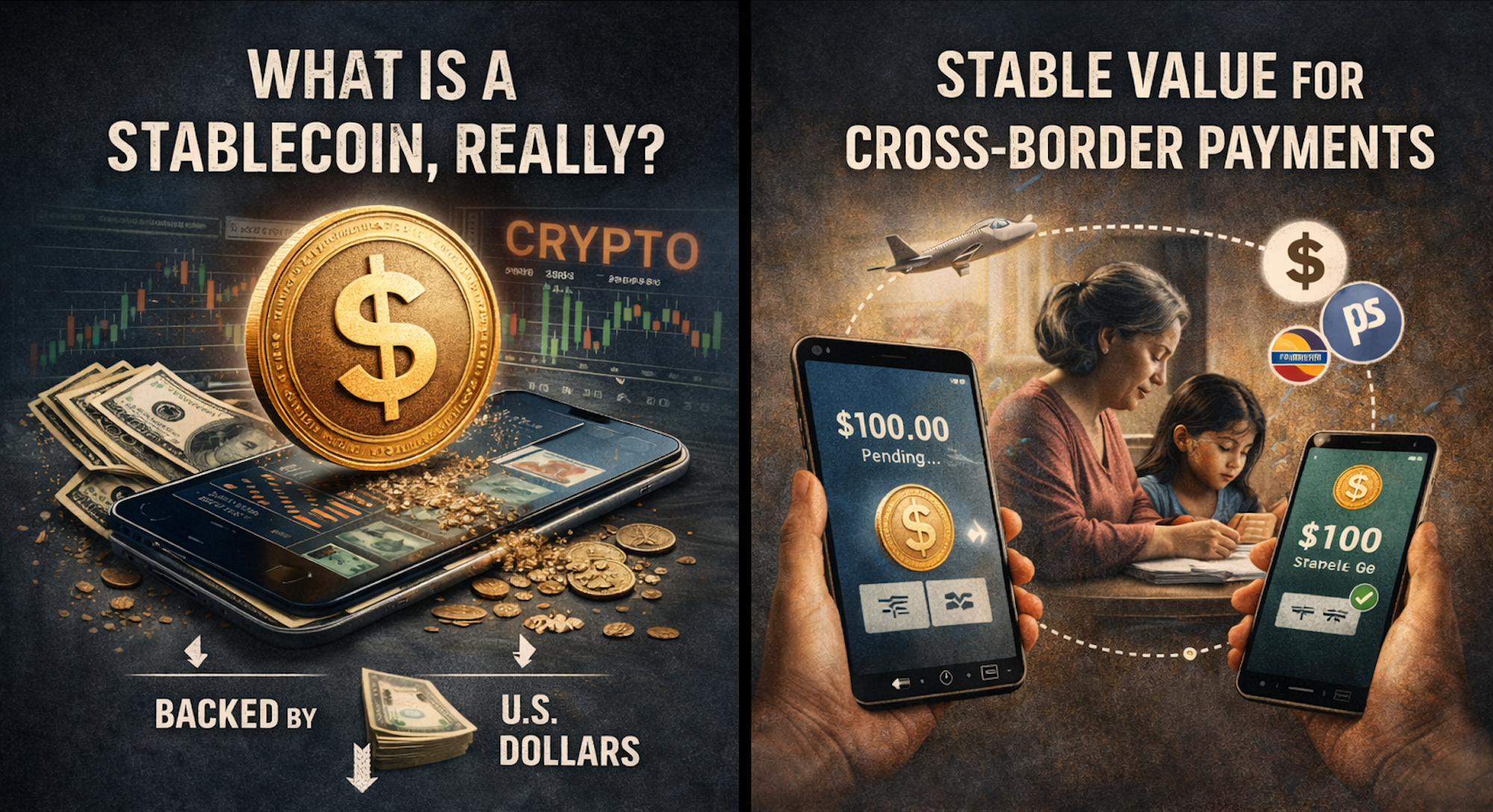
For many people, the word “crypto” brings to mind price swings, speculation, and risk.
Stablecoins are different.
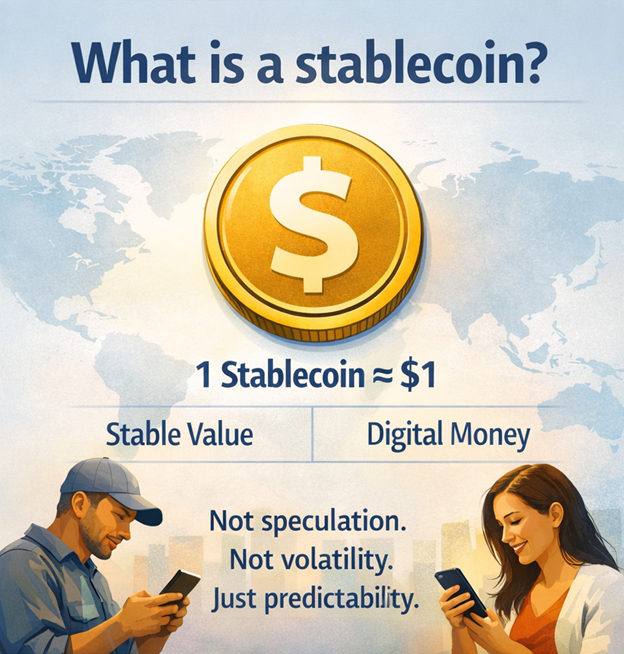
A stablecoin is a digital form of money designed to keep a stable value, usually linked to a national currency like the US dollar. One unit is meant to remain close to one dollar. Not more. Not less.
The goal is not growth.
It is predictability.
Why Stability Matters
Most people who send money across borders are not looking for upside. They are looking for certainty.
They want to know how much will arrive. When it will arrive. And that the value will not change overnight.
This is why stablecoins have increasingly been discussed not as speculative assets, but as payment instruments.
Not All Digital Money Is the Same
Stablecoins are issued under different models. Some are backed by cash and short-term government securities. Others rely on different mechanisms.
International institutions have stressed that the design and governance of stablecoins matter greatly for trust, safety, and adoption. Stability is not just a technical feature. It is a promise.
A Tool, Not a Trend
Stablecoins are best understood as infrastructure.
Like email for money.
When they work, they are almost invisible. When they fail, trust disappears quickly. This is why regulation, transparency, and oversight are central to their role in payments.
Understanding stablecoins starts with understanding what they are not: they are not meant to replace money. They are meant to move it.
Sources & References
- Bank for International Settlements
Annual Economic Report – chapters on digital money and payments - International Monetary Fund
Global Financial Stability Report – stablecoins and payment systems - World Bank
Research on digital payments and cross-border transfers