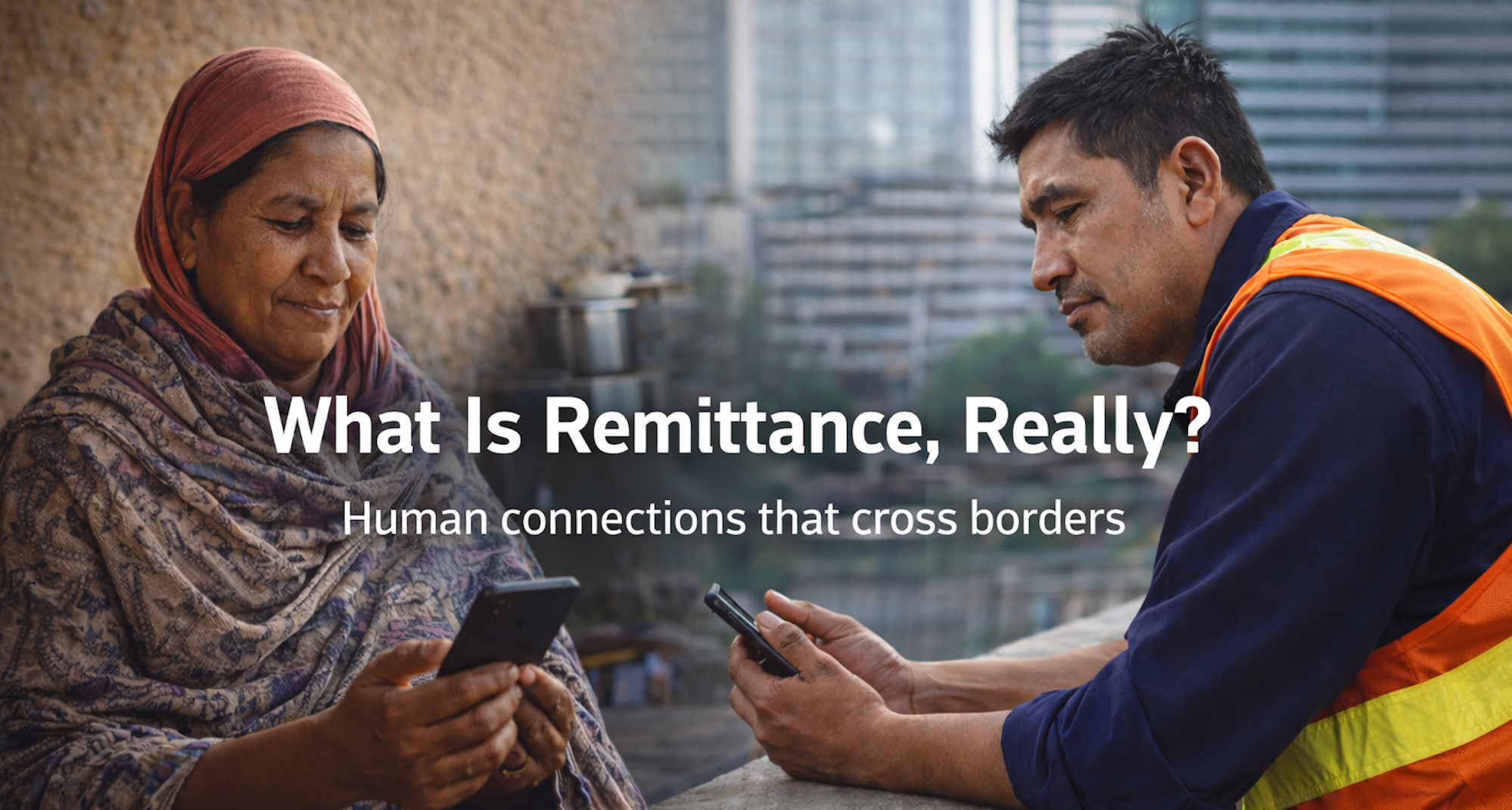
For millions of people, remittance is not a financial concept.
It is a habit. A responsibility. Sometimes a quiet promise.
It is the money sent by someone who works far from home to support people who stayed behind. A son sending money to his parents. A mother supporting her children from abroad. A sibling helping with school fees or medical bills.
Remittance is not about wealth.
It is about continuity.
More Than Money Sent Home
Most remittances are small. Often a few hundred dollars. Sometimes less. But they are sent regularly. Month after month. Year after year.
Recent analysis from the United Nations Department of Economic and Social Affairs (UN DESA) confirms that remittances are a primary income source for millions of households, directly supporting consumption, education, healthcare, and basic resilience. They are not occasional support. They are part of everyday life.
A Quiet Part of the Global Economy
Globally, remittances have become one of the largest financial flows to developing countries.
According to UN DESA, remittance inflows to low- and middle-income countries reached nearly 700 billion dollars in 2024, exceeding the combined total of foreign direct investment and official development assistance in both 2023 and 2024.
Yet despite their scale, remittances rarely make headlines. They move quietly. Person to person. Family to family.
Why Remittances Matter So Much
Remittances behave differently from other financial flows.
UN DESA research shows that remittances are less volatile than investment or aid and often act as a buffer during crises. When economies slow down or shocks hit home countries, remittances tend to hold up and sometimes increase, driven by family obligation rather than market logic.
A Human System
Behind every transfer is a personal story. Long working hours. Distance. Sacrifice.
Remittance systems may look like financial infrastructure, but at their core, they are human systems. Understanding remittance starts with understanding the people who depend on it.

Sources & References
- United Nations Department of Economic and Social Affairs
World Economic Situation and Prospects, Monthly Briefing No.196 (November 2025)
https://policy.desa.un.org/publications/world-economic-situation-and-prospects-november-2025-briefing-no-196 - World Bank
Migration and Development Briefs
Figures cited are based on the latest publicly available international estimates and may vary by corridor, country, provider, and reporting methodology.